


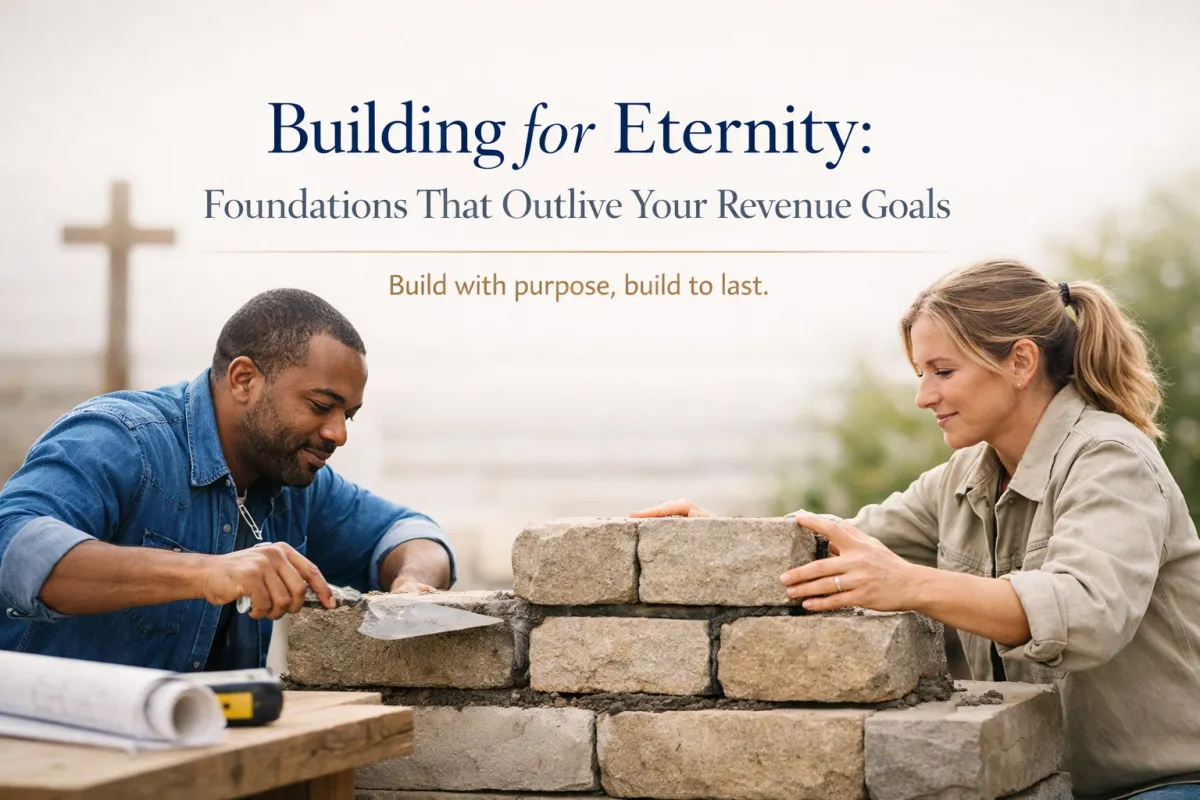
Building for Eternity: Foundations That Outlive Your Revenue Goals
Your quarterly revenue target isn't eternal. Neither is your market share. Neither is that exit strategy you've been refining.
The work you're doing right now? That might be.
Most Christian CEOs treat their faith and their business like separate ledgers. Sunday conviction. Monday execution. The bridge between them stays theoretical: something you nod to in mission statements but rarely integrate into your decision framework.
At some point, leadership stops being about hitting numbers and starts being about stewardship. Not the soft kind. The accountable kind.
What Psalm 127 Says About Your Strategy
"Unless the Lord builds the house, the builders labor in vain."
That's not poetic comfort. It's operational reality.
You can execute flawlessly. Build the right team. Nail your positioning. Scale with discipline. But if the foundation isn't anchored in something beyond quarterly performance, you're building on sand: even if it looks like success for years.
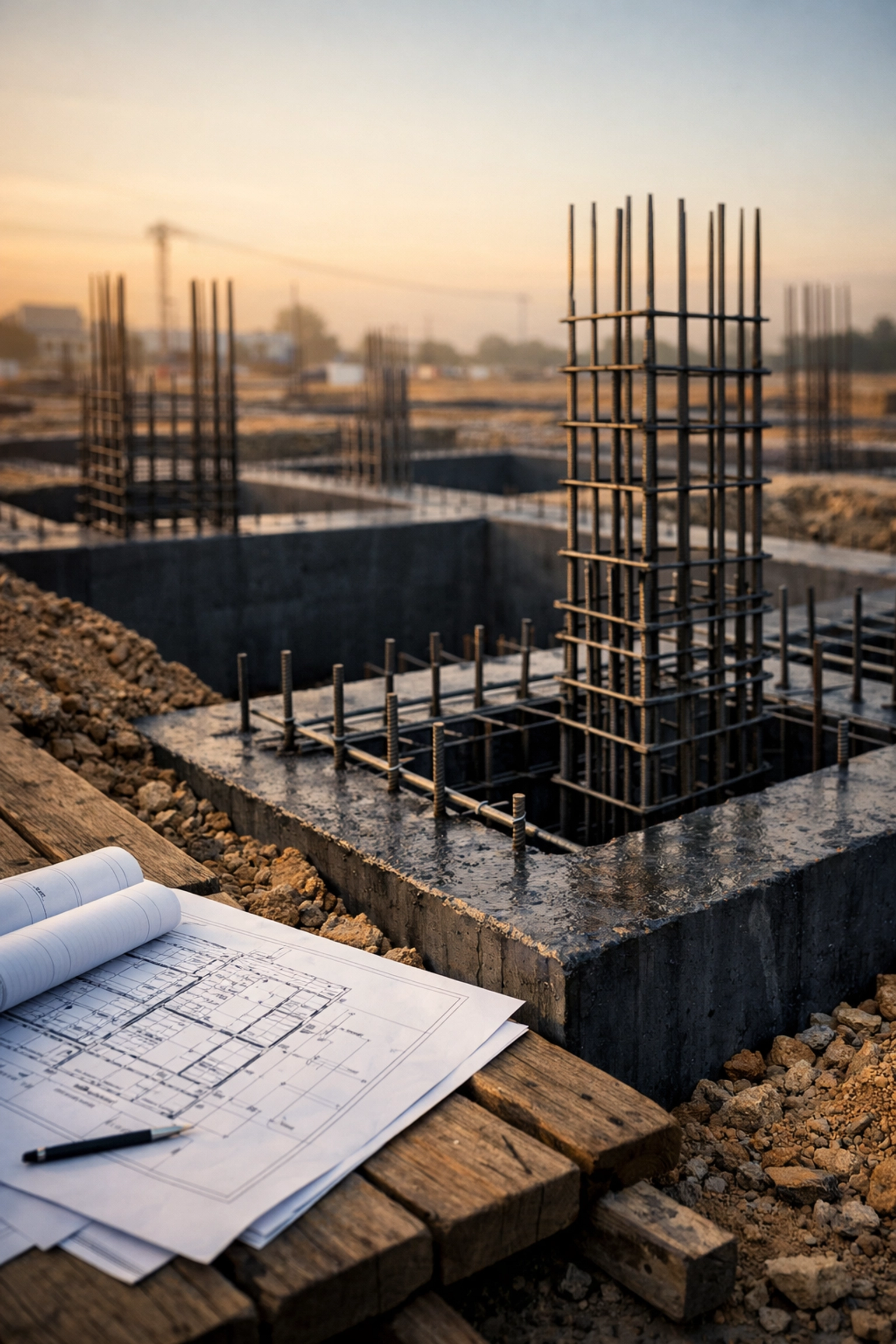
The problem isn't that you lack ambition. It's that your ambition might be aimed at targets that won't matter in ten years. Revenue is a lagging indicator. Legacy is what you're building while you're focused on the scoreboard.
This isn't about choosing ministry over profit. It's about recognizing that profit without purpose is just organized motion.
The Difference Between Building and Accumulating
Paul writes in 1 Corinthians about builders using gold, silver, costly stones: or wood, hay, and straw. Same construction site. Different materials. The fire reveals which one lasts.
Most leaders confuse accumulation with building. They stack revenue. Add headcount. Expand markets. The motion feels productive. But motion isn't the same as foundation.
Building for eternity means asking a different set of questions before you make decisions:
Does this create lasting value or temporary revenue? Not every dollar is equal. Some revenue comes from serving well. Some comes from cutting corners. Both show up the same on a P&L. They don't show up the same in legacy.
Am I developing people or extracting productivity? Your team isn't overhead. They're the primary asset. Leaders who build for eternity invest in growth even when it slows short-term output. Leaders who accumulate burn through talent and call it performance management.
Will this decision require compromise I can't undo? Integrity isn't situational. The moment you treat it like a variable cost, you've shifted from building to accumulating. And once you cross certain lines, the foundation cracks: even if the building still stands.
The Eternal Accountability Framework
You operate with a dual bottom line whether you acknowledge it or not. Financial performance. Eternal impact.
Most Christian business owners focus 95% of their strategic energy on the first line. They treat the second like a nice-to-have: something they'll address once the business stabilizes.
But eternity doesn't wait for your revenue to stabilize.

Here's what accountability to eternal metrics actually looks like in practice:
Stewardship as your primary fiduciary responsibility. You're managing resources that don't belong to you. That changes how you allocate capital, how you treat margin, how you measure success. Stewardship doesn't eliminate profit. It reframes it. Profit becomes capacity to serve, not the endgame.
Service as your competitive advantage. Businesses built to serve outlast businesses built to extract. This isn't soft leadership. It's the hardest kind: because it requires restraint when you have leverage and generosity when you have margin.
Excellence as an act of worship. You don't pursue quality because it's good branding. You pursue it because subpar work dishonors the One who called you to lead. Excellence isn't perfectionism. It's the disciplined execution of work that reflects your Maker.
Justice as your operating standard. Fair treatment isn't a PR strategy. Honest pricing isn't optional. Ethical practices matter even when no one's watching: especially when no one's watching. Justice is what happens when integrity becomes systematic.
Where Most Leaders Get It Wrong
They treat eternal perspective like a future concern. Something to think about after the business matures. After the exit. After financial security.
That's backwards.
Eternal perspective isn't the destination. It's the foundation. You don't build a company and then add purpose. You build from purpose and let the company be the expression of it.
The leaders who get this right don't separate their faith from their strategy. They integrate conviction into decision-making at the earliest possible point. Before the pitch deck. Before the hire. Before the pivot.
They start strategic planning with prayer: not as a ritual, but as reconnaissance. They craft mission statements that reflect God's purpose, not just market positioning. They set goals that serve both profit and purpose, recognizing those aren't competing priorities.

What Disciplined Leaders Do Differently
Leaders building for eternity operate with a longer time horizon. They sacrifice short-term wins for sustainable impact. They choose integrity over expedience even when it costs margin.
They assess decisions against biblical principles before financial projections. Not instead of financial projections. Before them. The question isn't "Can we afford this?" It's "Should we do this?": and the "should" comes from conviction, not convenience.
They invest in people's development even when it slows immediate productivity. They know that leaders who extract performance get results. Leaders who develop people create legacy.
They measure success differently. Not just EBITDA. Not just growth rate. But lives touched. Dignity restored. Capacity built. Kingdom impact created.
Building Foundations That Last
Ecclesiastes reminds us there's a time for everything. A season to build. A season to establish. The question isn't whether you're building. You are. The question is what you're building with.
Wood, hay, and straw look productive in the moment. They're quick. Efficient. They let you move fast and report progress.
Gold, silver, and costly stones take longer. Require more. Demand patience.
But only one survives the fire.
Your business will be tested. Market shifts. Leadership transitions. Economic pressure. Personal crisis. When those moments come, the foundation determines what remains.
Revenue evaporates. Market share shifts. Competitive advantages erode.
But work done with integrity? Teams developed with intention? Impact created with conviction? That outlasts the business cycle.
The Practical Reset
Start here:
Audit your decision framework. What actually drives your choices? Is it margin? Market pressure? Competitive positioning? Or is it conviction rooted in something eternal? Most leaders say faith matters. Few leaders filter decisions through it first.
Redefine your success metrics. Add a line to your dashboard that measures eternal impact. Lives changed. Dignity honored. Capacity built. If you can't measure it, you won't manage it: and if you only measure revenue, that's all you'll build for.
Align your resource allocation. Where you spend time and capital reveals what you actually value. Look at your calendar. Look at your budget. Do they reflect building for eternity or accumulating for exit?
Invest in a christian leadership program that integrates conviction with execution. You can't build what you haven't learned. Faith-integrated leadership isn't intuitive. It's developed. Christian leadership coaching that anchors strategy in stewardship changes how you lead: and what you leave behind.
The Work That Outlasts You
You'll be remembered for what you built, not what you earned.
Your team will remember how you led them, not what you paid them.
Your industry will measure your impact by who you served, not what you sold.
And the legacy that matters most? It's being written right now: in the decisions you make when no one's watching, the integrity you maintain when it costs you, and the conviction you follow even when it doesn't show up on this quarter's report.
Build for eternity. The foundation you lay today determines what remains when everything else burns away.